
Actualités
Actualités

Why Modern Amenity Standards in Canadian Commercial Real Estate Start in the Restroom
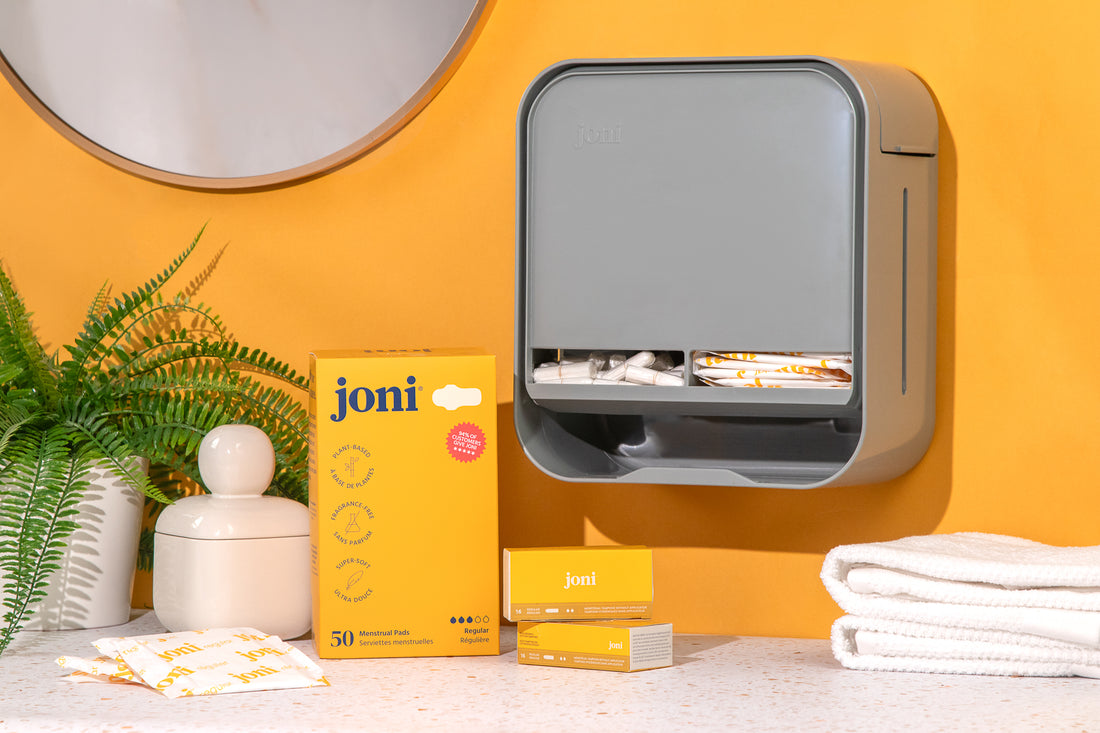
Executive Summary & Key Takeaways (TL;DR) BOMEX 2026 Connection: joni proudly sponsored BOMEX 2026 in Ottawa under the theme "Timbers to Towers," leading conversations on modernizing building amenities for Canadian commercial towers. The New Washroom Standard: Free-vend, organic period care has shifted from an optional perk to an essential building amenity directly driving tenant satisfaction and return-to-office engagement. ESG & BOMA BEST Alignment: Providing accessible period products supports GRESB social metrics, equity criteria, and BOMA BEST certification benchmarks. Legislative Mandates: Meets federal requirements under the Canada Labour Code for federally regulated workplaces and aligns with expanding provincial guidelines. Operational Efficiency via Smart Tech: joni’s Model V dispenser solves custodial challenges using automated inventory tracking, refill reporting, and smart dispensing delays that cut product waste by up to 40%. Sponsoring BOMEX 2026: Why Accessible Period Care Belongs in Commercial Real Estate At BOMEX 2026 in Ottawa, commercial real estate leaders gathered under the inspiring theme "Timbers to Towers." Honouring Bytown’s 200-year history alongside BOMA Ottawa’s 50th anniversary, the conference highlighted how Canadian building infrastructure and tenant standards continually evolve to meet human needs. As an official sponsor of BOMEX 2026, joni took the stage to champion an essential, yet historically overlooked, building standard: accessible period care in commercial washrooms. Key Takeaway from BOMEX Discussions: Across conversations with Property Managers, Asset Directors, and General Managers, we encountered strong engagement and curiosity. Many leaders noted that while they had never previously evaluated period care as a primary building amenity, they immediately recognized its natural alignment alongside foundational supplies like hand soap and paper towels. Providing free-vend period care is no longer viewed merely as a progressive gesture—it has become a practical operational benchmark that elevates property perception, tenant retention, and operational excellence. 3 Core Drivers Transforming Commercial Washrooms into 2027 Commercial building owners and facility executives face shifting tenant expectations and stricter regulatory landscapes. Three macro trends are driving the adoption of period care programs across Canadian office towers: Tenant Retention & Return-to-Office As workplace leaders focus on encouraging return-to-office, removing everyday friction in high-traffic washrooms directly elevates occupant satisfaction scores. ESG & BOMA BEST Standards Offering premium, sustainable period products satisfies GRESB social benchmarks and contributes toward BOMA BEST waste-reduction goals. Regulatory Compliance Fulfills federal mandates under the Canada Labour Code and prepares private commercial properties for emerging provincial health guidelines. Solving Facility Challenges with Smart Technology: The Model V Dispenser Historically, property management teams hesitated to introduce free-vend period care due to three major concerns: uncontrolled product waste ("sweeping"), unpredictable inventory consumption, and added custodial burden. joni engineered the commercial-grade Model V dispenser specifically to eliminate these operational barriers through smart technology and automated reporting. Facility Challenge Traditional Dispenser Issue joni Model V Smart Solution Product Waste / Hoarding Users clear out free products all at once ("sweeping"). Anti-Sweeping Timed Delays prevent bulk grabs while maintaining steady availability. Inventory Management Unpredictable stockouts require manual bathroom audits. Automated Usage Tracking alerts facility managers when refills are required. Custodial Workload Staff spend unnecessary hours checking empty dispensers. Low-Touch Execution integrates seamlessly into routine cleaning schedules. Recommended Reading: 3 Janitorial Trends Facility Managers Need to Know in 2026 → Operational Roadmap: Implementing Turnkey Period Care Across Your Portfolio Transitioning your commercial portfolio to an automated, free-vend period care model requires zero disruption to daily building operations. Here is how leading Canadian property management teams roll out joni: Step 01 Needs & Footprint Analysis Evaluate building floor counts, occupant density, and washroom layouts to establish precise dispenser requirements. Step 02 Model V Deployment Deploy commercial-grade, battery-operated units with zero electrical rewiring needed. However, the Model V also contains components to be hard wired if preferred. Step 03 Automated Restocking Supply facility staff with organic, bulk-packaged refills built for maximum custodial efficiency. Frequently Asked Questions (Commercial Facility Management) Why should property managers provide free-vend period care in commercial office towers? Providing free-vend period care elevates tenant satisfaction, supports return-to-office initiatives, advances ESG and BOMA BEST social scores, and ensures compliance with Canadian workplace equity guidelines (including the Canada Labour Code). How does the joni Model V dispenser prevent product waste and sweeping? The Model V dispenser utilizes smart dispensing delays that introduce a timed mechanism between dispenses. This mechanism prevents individuals from emptying the unit all at once while ensuring continuous access for all building occupants, reducing product waste by up to 40%. How does smart tracking assist janitorial and facility management teams? Smart inventory tracking provides facility directors with real-time stock reporting. This eliminates the need for custodial teams to manually inspect dispensers during every shift, saving labour hours and streamlining stock replenishment. Are joni products compliant with commercial ESG and zero-waste targets? Yes. joni products contain ethically sourced materials, including organic cotton and viscose from organic bamboo. They're third-party tested for toxins, free from elemental chlorine, and unscented. Tampons are 100% compostable where facilities exist. Wrappers are compostable and packaging is recyclable.
Lire la suite
Canada Labour Code Compliance Guide for Employers
Key Takeaways The Rule: Since December 15, 2023, federally regulated employers in Canada must provide free tampons and menstrual pads in every washroom, regardless of its marked gender. Who It Covers: All federally regulated workplaces, including airlines and airports, banks, telecom, broadcasting, postal and courier services, interprovincial transportation, and federal Crown corporations. What's Required: Pads and tampons in every toilet room, plus a covered disposal container in every single-toilet room and in each stall of multi-toilet rooms. The Risk: Non-compliance can trigger administrative monetary penalties of roughly $750 to $12,000 per violation. The Upside: Free, accessible period care reduces absenteeism and shows every employee they're supported. Why Workplace Period Care Matters Picture this: you're in a washroom stall at work and realize there's no toilet paper. Now you're stuck, hoping someone walks in with a square to spare. For people who menstruate, that scenario is all too familiar, except it's an unexpected period, not a missing roll. Even the most regular cycles can show up early. According to a Free the Tampons Foundation survey, 86% of people who menstruate have started their period unexpectedly in public, and 34% have had to leave work or school as a result. That lost time adds up, for employees and for the businesses that rely on them. The good news? Canada is changing that. The federal government estimates about 35% of employees in federally regulated workplaces need menstrual products on a regular basis, and it has made free access a legal requirement. What Is Canada's Menstrual Products Regulation? The Regulations Amending Certain Regulations Made Under the Canada Labour Code (Menstrual Products), registered as SOR/2023-78, amend the sanitation rules under Part II (Occupational Health and Safety) of the Canada Labour Code. They came into force on December 15, 2023. The core requirement sits in section 9.17 of the Canada Occupational Health and Safety Regulations, with matching changes to the aviation, maritime, on-board trains, and oil and gas occupational health and safety regulations. The federal government describes these provisions as the first of their kind in the world, given how many types of workplaces they cover. “We'd never ask people to bring their own toilet paper to work. So why do we do that with menstrual products?” — Government of Canada news release, October 2022 Who Does the Requirement Apply To? The requirement applies to every federally regulated workplace in Canada, in both the private and public sectors. That includes: Airlines and airports Banks Most federal Crown corporations Postal and courier services Radio and television broadcasting Telecommunications Rail, road, and marine transportation crossing provincial or international borders Grain elevators and uranium mining First Nations band councils and Indigenous self-governments The federal public service Provincially regulated? This federal rule doesn't apply to you directly, but stocking your washrooms is still a smart operational move for employee wellness, tenant satisfaction, and retention. What Are the Federal Requirements? Here is a breakdown of what federally regulated employers need to implement to stay compliant: Requirement Compliance Standard Operational Details Product Availability Free pads and tampons in every toilet room Must be clean, hygienic, and accessible regardless of the washroom's marked gender. Alternative Locations Permitted only when washroom stocking isn't feasible Must be employer-controlled, accessible at all times, and ensure employee privacy. Waste Disposal Covered disposal containers required Must be placed in every single-toilet room and inside every stall of multi-toilet rooms. Maintenance & Stock Continuous supply Routine restocking schedules must prevent stockouts during all working shifts. Choosing Products You must provide both pads and tampons. Any brand is allowed; eco-friendly options are strongly encouraged. Consulting employees and union representatives on product choice is recommended, though not required. Reusable products (such as cups, reusable pads, or period underwear) can be offered in addition to pads and tampons, but not instead of them. Distribution for Remote and Mobile Workplaces Workplaces such as remote field sites or cross-border rail, air, and marine transport can utilize flexible methods, such as an office supply cabinet in a staff rest room or portable menstrual product kits that employees can carry. The government highlights that this policy is inclusive of everyone who menstruates—including cisgender women, non-binary people, transgender men, and intersex people—supporting the well-being of nearly half a million Canadian workers. What Happens If You Don't Comply? The menstrual product provisions are strictly enforceable through the Administrative Monetary Penalties (Canada Labour Code) Regulations. Enforcement & Financial Risk Depending on the size of the employer and the severity classification of the violation, penalties range from approximately $750 to $12,000 per violation. Beyond monetary fines, non-compliance exposes organizations to formal inspections, binding compliance orders, and significant damage to internal employee trust. The Business Case for Free Period Products at Work Meeting code standards is merely the baseline. Investing in accessible period care delivers direct organizational returns: 1. Better Employee Health and Wellness When caught without products, 79% of people report improvising with makeshift alternatives like toilet paper. That is uncomfortable and risks physical irritation or infection. Stocking products eliminates unnecessary anxiety, shame, and stigma. 2. Reduced Absenteeism, Increased Productivity Without access to supplies, 62% of people leave the workplace to buy products and 34% go home entirely. Providing supplies in the building stops lost hours and keeps teams present and focused. 3. Workplace Equity & ESG Alignment Menstruation is a routine biological function. Treating pads and tampons as essential washroom staples alongside toilet paper and hand soap reinforces an inclusive, equitable work culture. How joni Makes Compliance Easy joni is a Canadian period care brand providing organic, biodegradable pads and tampons since 2020. Our giveback program partners with non-profits nationwide to distribute essential period products where they are needed most. Partnering with organizations like the Sheridan Students' Union (SSU) taught us that leaving retail boxes on counters creates waste and custodial headaches. We engineered a scalable turnkey solution for commercial facilities: joni Solution Key Feature Facility & Operational Benefit Wholesale Subscriptions Automated reordering schedules Continuous supply prevents stockouts and eliminates administrative purchasing overhead. Commercial Free-Vend Dispenser Smart timed dispensing delay Cuts product sweeping/hoarding by up to 40% while keeping products readily available. Open Dispenser Compact wall or counter mount Ideal for small offices, individual stalls, and low-traffic areas. Organic Pads & Tampons Biodegradable within 12 months Plastic-free and chlorine-free; directly supports building ESG goals and UN SDGs. Trusted Across Canada We have helped forward-thinking organizations—including the Sheridan Students' Union, the District of Saanich, the University of Victoria, and Victoria International Airport—deliver accessible period care. Frequently Asked Questions Do Canadian employers have to provide free menstrual products? Yes, if they are federally regulated. Since December 15, 2023, the Canada Labour Code requires federally regulated employers to provide free tampons and menstrual pads in every toilet room, regardless of marked gender, alongside covered disposal containers. Provincially regulated businesses are not mandated by this federal rule, though many implement programs voluntarily. Which workplaces must provide free pads and tampons? All federally regulated workplaces, including air transport and airports, banks, federal Crown corporations, postal and courier services, telecommunications, broadcasting, interprovincial transport, grain elevators, uranium mining, First Nations band councils and Indigenous self-governments, and the federal public service. What is the penalty for not complying? Violations are enforceable through administrative monetary penalties ranging from roughly $750 to $12,000 per violation, based on company size and violation category. Can we provide only reusable menstrual products? No. The regulations explicitly require tampons and menstrual pads. Reusable options (menstrual cups, reusable pads, period underwear) may be offered as an optional addition, but cannot replace disposable pads and tampons. What if we cannot stock products directly in the washroom? Employers must supply them in an employer-controlled location accessible at all times that guarantees reasonable privacy, such as a secure cabinet in an employee break room or portable kits for transit and field teams. Ready to Stock Your Workplace? Whether you need to meet mandatory federal compliance or simply want to elevate tenant and employee wellness, joni has a turn-key solution scaled for your footprint. Contact our team: sales@getjoni.com Sources & Regulatory References Canada Gazette, Part II: SOR/2023-78, Regulations Amending Certain Regulations Made Under the Canada Labour Code (Menstrual Products) Canada Gazette, Part I: Proposed Regulations and Regulatory Impact Analysis Statement (October 15, 2022) Government of Canada News Release: Free Menstrual Products in Federally Regulated Workplaces (October 2022) Free the Tampons Foundation: Workplace Menstrual Product Survey Originally published August 21, 2023. Updated October 27, 2026.
Lire la suite